
 Advance Gum Treatment
  Braces
  Laser Dentistry
  Dental Implants
  Dental Crown & Bridge
  Dental Filling & Restoration
  Dentures
  Full Mouth Rehabiliation
  Gum Disease
  Invisible Aligners
  Kids Dentistry / Pediatric Dentistry
 .png)
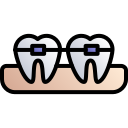
Misaligned, crowded, or gapped teeth can affect not just the appearance of your smile but also your oral health and even your self-confidence. Braces treatment is the most well-established and reliable way to correct dental alignment, and at We Care Dental Clinic in Sakchi, Jamshedpur, we offer a range of orthodontic options for children, teenagers, and adults.
Our approach to braces treatment begins with a thorough assessment of your teeth, jaw, and bite. We use digital X-rays and dental models to understand your unique orthodontic situation and then recommend the most appropriate type of braces to achieve the best possible result most comfortably.
Types of Braces Available at We Care Dental Clinic
Traditional Metal Braces: The most widely used and cost-effective orthodontic option. Modern metal braces are smaller, smoother, and more comfortable than the bulky designs of the past. They are highly effective for treating even complex alignment issues and are suitable for all age groups.
Ceramic Braces: Similar in mechanics to metal braces but made from tooth-coloured or clear ceramic material. They are far less visible than metal braces and are popular among teenagers and adults who want a more discreet option while still benefiting from the proven effectiveness of bracket-and-wire orthodontics.
Lingual Braces: Placed on the inner surfaces of the teeth rather than the outer, lingual braces are completely hidden from view when you smile. They are a great option for patients who need traditional orthodontic treatment but do not want any visible appliances.
Clear Aligners (Invisible Aligners): A series of removable, transparent trays that progressively move teeth into alignment. Ideal for mild to moderate cases and highly popular among adults. See our dedicated Invisible Aligners page for full details.
What Conditions Can Braces Treat?
Braces are effective for treating crowded teeth (where there is not enough space in the jaw), widely spaced teeth (gaps between teeth), overbite (upper front teeth overlap the lower front teeth excessively), underbite (lower teeth protrude in front of upper teeth), crossbite (upper and lower teeth do not close together properly), and open bite (upper and lower front teeth do not meet when the back teeth are closed).
In some cases, braces work best in combination with other treatments such as orthodontic expanders for jaw development in children, or jaw surgery in adults with severe skeletal discrepancies.
The Braces Treatment Process
The journey begins with a detailed orthodontic consultation where we assess your bite, teeth, and jaws. We explain your options, the expected duration of treatment, and what the process involves. Once you decide to proceed, we take impressions or digital scans and X-rays to plan your treatment precisely.
Braces are fitted in a single appointment. You will return every four to six weeks for adjustments, where we tighten the wires or change aligner trays to continue moving your teeth. Treatment duration typically ranges from twelve to twenty-four months, depending on complexity. Once the desired alignment is achieved, the braces are removed, and retainers are provided to maintain your new smile.
At what age should my child start braces?
Most orthodontic treatment begins between the ages of ten and fourteen when most of the permanent teeth have erupted. However, early assessment from age seven onwards can help us identify developing issues and plan treatment at the optimal time.
Do braces hurt?
The fitting of braces is generally painless. You may feel soreness for a few days after fitting and after each adjustment appointment, which is a sign your teeth are moving. This discomfort is mild and typically manageable with standard pain relief medication.